
Commercial Air Conditioning Solutions for Businesses in the Whitsundays
- Trusted by local businesses for over 25 years
- Custom-built commercial HVAC & refrigeration systems
- Fast response times & expert after-sales service
- Full in-house capability, one team from design to handover
Commercial Air Conditioning Experts
When it comes to commercial air conditioning, there’s no one-size-fits-all solution. Each space, industry, and climate control requirement demands a system that is energy-efficient, reliable, and built for long-term performance.
At Nauticool, we understand that air conditioning is often the largest ongoing energy cost for businesses—so getting the system right from day one is critical. What sets us apart is that our engineer handles design, specification and installation without you needing to coordinate architects, tenders or outside consultants. Every decision is made in-house, which keeps your project on track and your costs under control.
We're also proud to work alongside D & C Mechanical Electrical, a division of Nauticool, bringing together specialist expertise in commercial electrical and air conditioning to deliver complete, end-to-end solutions for businesses across the Whitsundays.
Need help choosing the right commercial air conditioning system? We’re here to help you find the most efficient, cost-effective solution for your premises
How It Works
When it comes to construction air conditioning, getting it right from the start saves time, money and headaches down the track. At Nauticool, we manage the entire process in-house, from reading your plans to final handover, so your project stays on schedule and your systems perform from day one.
STEP 1:
Give Us Your Plan
Send us your building or construction plans and we'll get to work. Our in-house engineer reviews the scope, assesses your cooling and refrigeration requirements, and identifies the right system for the space, whether that's a large split ducted system, packaged units or a commercial chilled water system.
STEP 2:
We Do The Design
We develop a full design tailored to your project, factoring in energy efficiency, compliance and long-term performance. Every design is completed by our qualified engineers to meet commercial standards before a single piece of equipment is ordered.
STEP 3:
We Install Equipment From The Design
Our experienced technicians carry out the full installation to spec, on time and on site. From air conditioning and refrigeration to electrical fit-out, everything is handled by our own team so there are no delays waiting on subcontractors.
STEP 4:
We Handover Completed Product
Once installation is complete, we commission and test everything to make sure it's performing exactly as designed. We walk you through the system, provide all documentation, and ensure you're confident before handover.
STEP 5:
We Maintain It
Our relationship doesn't end at handover. Nauticool offers ongoing programmed maintenance and 24/7 emergency support to keep your systems running efficiently year-round, protecting your investment and your business continuity.
There are 4 main types of air conditioners that are optimal for commercial use
At Nauticool, we specialise in the design, installation and maintenance of the four most effective commercial air conditioning systems. Below, we’ve outlined how each system works, and the advantages and disadvantages, to help you determine which option best suits your space and operational needs.
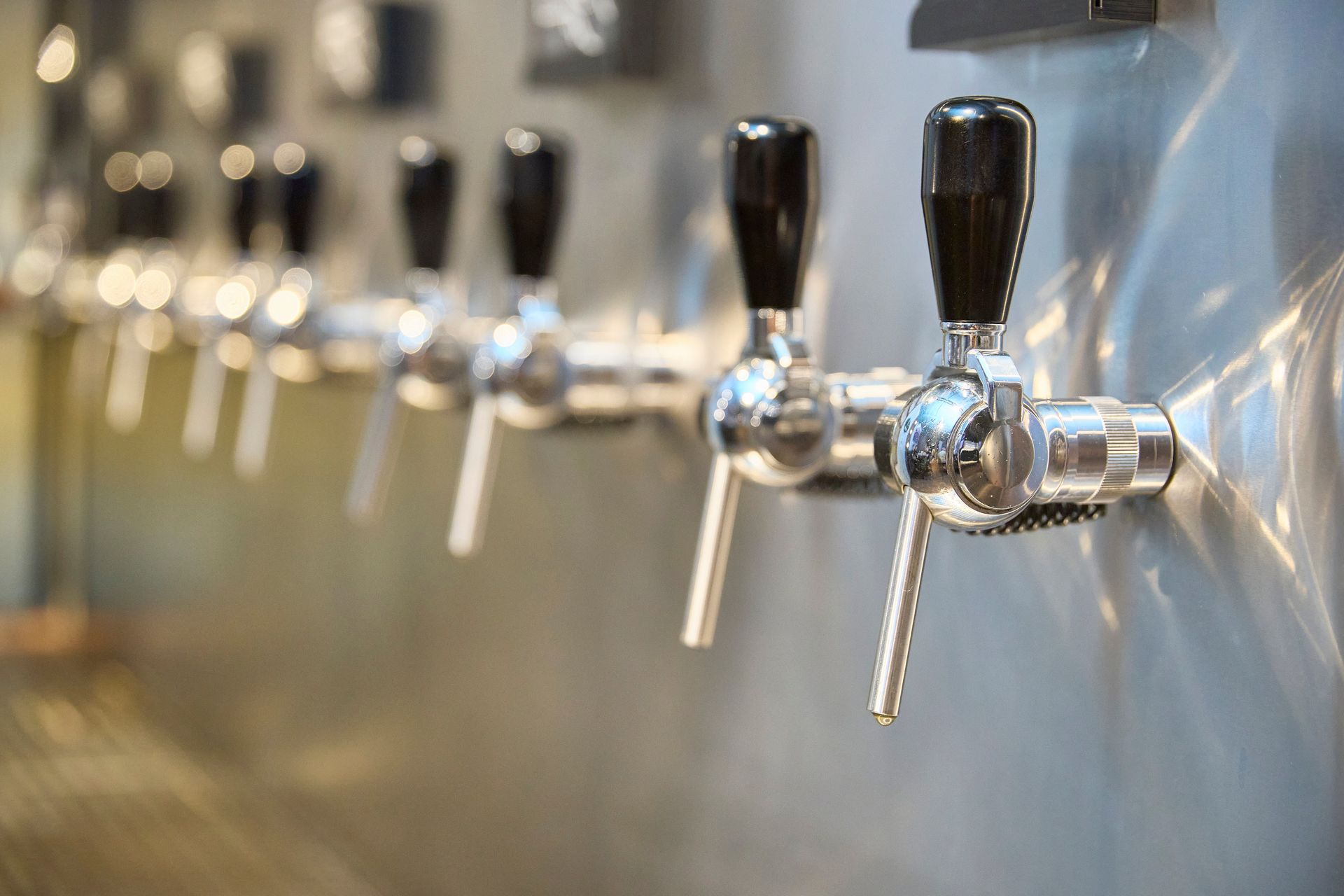
CHILLED WATER SYSTEMS
- Chilled water systems pipe cool water throughout the building to lower the temperature of each room. This system is usually used in very large commercial buildings such as factories or industrial plants. Other types of cooling systems like window or split systems simply aren’t feasible for large commercial spaces. In order to get the same effect you’ll have to install multiple units in the same room.
- Chilled water systems are more efficient at removing heat and cooling large spaces. These systems use water as a secondary refrigerant. The water is chilled by the refrigerant first which in turn cools the air in the room as it circulates. This is different from direct expansion where the air is cooled directly by the refrigerant.
- Chilled water systems are very easy to use and versatile. They don’t carry any oil so there are no oil return problems after using them for a while. The power from these systems is enough to cover multiple floors of large buildings.
- The only disadvantages of child water systems are the high initial installation costs as well as the installation being more complicated than other types. These types of systems can also be very noisy.
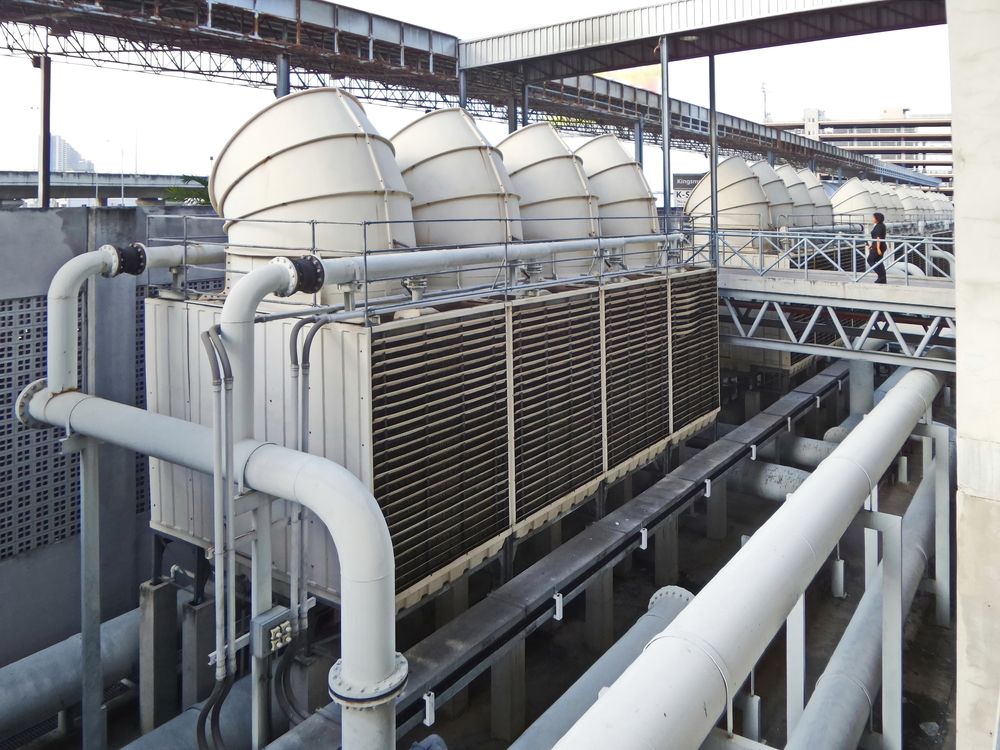
VRV/VRF SYSTEMS
VRV stands for Variable Refrigerant Volume and VRF stands for Variable Refrigerant Flow. While they both mean the same thing technically, Daikin has copyrighted the term VRV & all other companies must use the term VRF.
- These systems are very versatile and best used in large buildings such as schools, hotels and large offices. This type of system controls the amount of refrigerant that flows to the indoor units, which are called evaporators. This allows the evaporators to have different capacities & configurations which means each room can be customized for optimal comfort. This means you can have one room being cooled while another room is being heated.
- VRV/VRF systems continuously adjust the flow of refrigerant, which makes the system more energy efficient. This systems boast 30% energy savings compared to traditional air conditioning units.
- VRV/VRF systems have excellent dehumidification technology for optimal room humidity regardless of the climate outside. These systems are also capable of simultaneously heating and cooling multiple rooms. These systems are also lightweight and the ducted is comparable to standard ducted systems, which reduces costs.
- One of the disadvantages of these systems is they don’t have their own ventilation so additional ventilation needs to be installed. Also once installed these units are not very flexible. The main disadvantage is the difficulty of repairing coolant leaks but this usually only occurs from a poor quality installation.
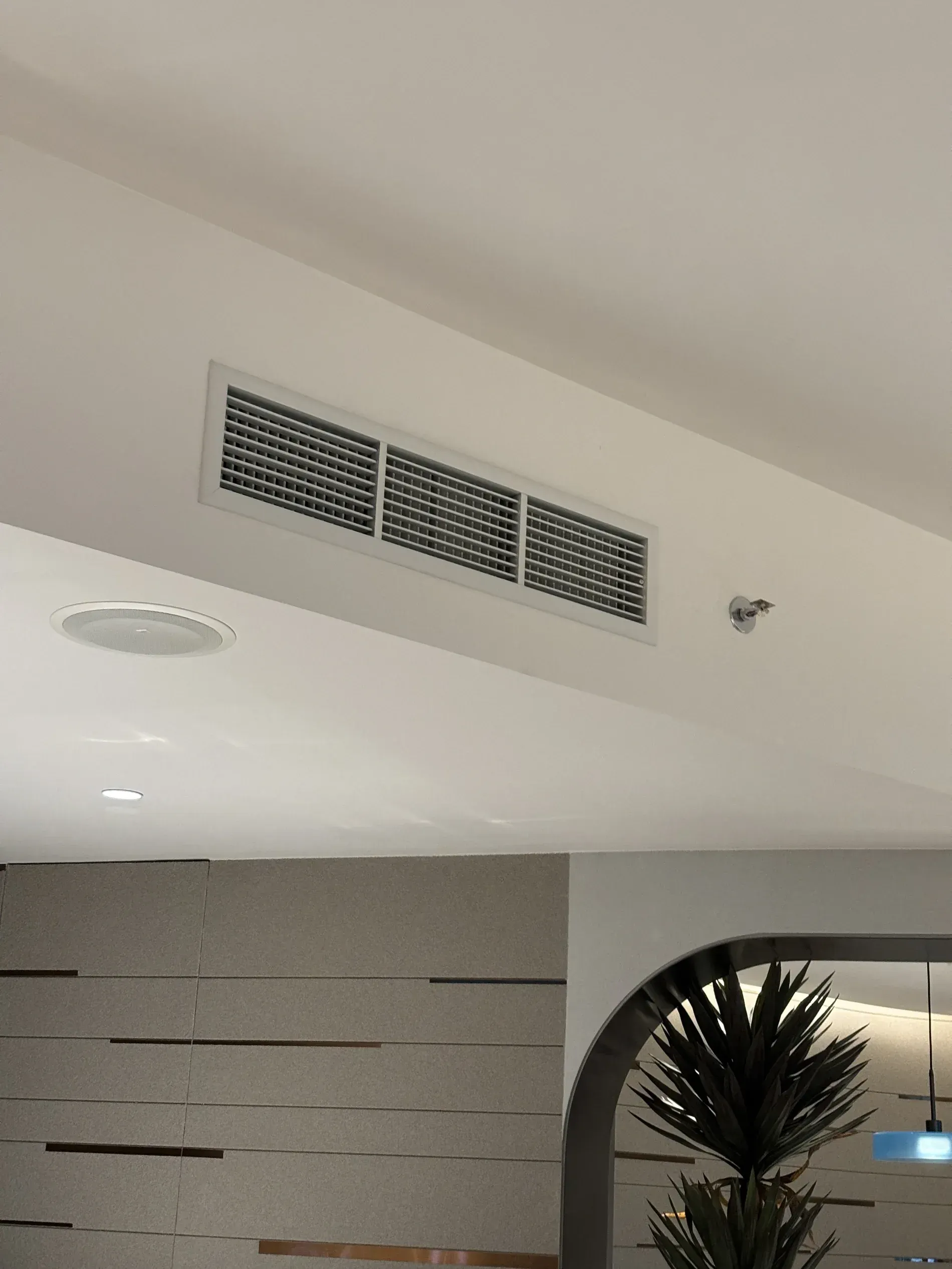
LARGE SPLIT DUCTED SYSTEMS
- Split ducted systems provide cooling through a series of ductwork concealed within the building. This type of system is usually preferred for commercial properties as one unit can cool multiple areas of a building. Split ducted systems are among the quietest and versatile options for cooling large spaces.
- Split ducted systems get their name because it’s made from two components that are split apart. The internal part of the unit includes the fan & the heating/cooling coil, which is attached to a network of ducts and placed on the roof. The external part of the unit holds the compressor and is usually placed on the ground, wall or even roof. These systems can also double as heating or cooling units depending on your climate.
- One big advantages of this type of system is the zoning capabilities that the unit has. One unit can cool multiple rooms and the zoning function lets you choose which areas needs to be focused on. Split ducted systems are also able to mix in fresh air form outside to keep the quality of air as high as possible. These systems are extremely quiet for the space that they’re able to cool and are easily controlled from a wall-mounted thermostat.
- These large split systems are generally less flexible than other types of air conditioners. If you don’t take advantage of the zoning features the units can be expensive to run. The initial install cost is also high.
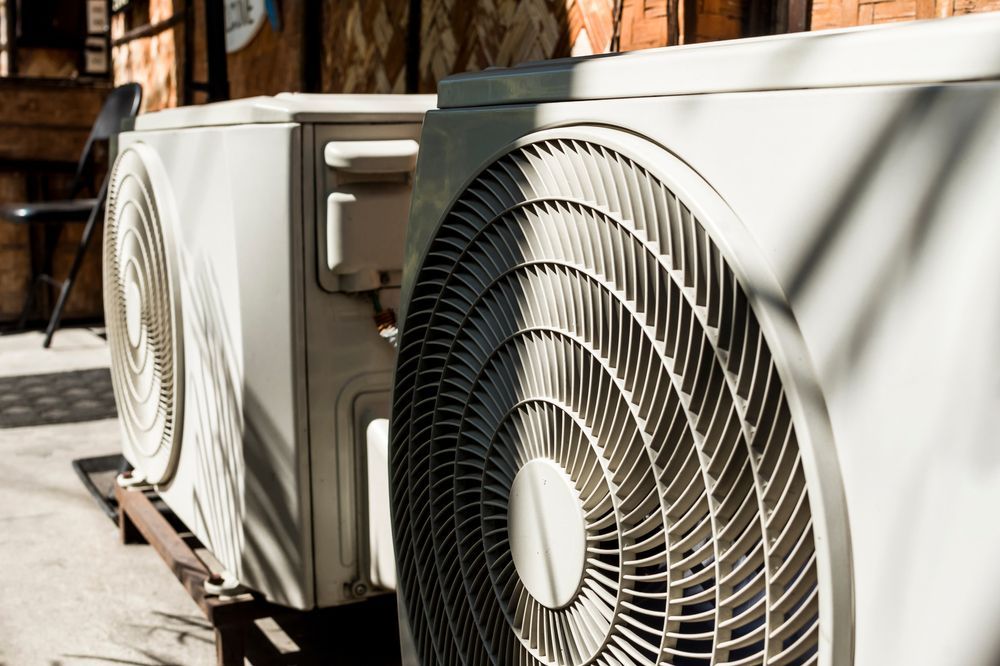
PACKAGED UNITS
- Package unit air conditioners are optimal for spaces too small for central air conditioning and too large for window or split air conditioners. Packaged units are generally used in large office spaces, restaurants, small venues and other commercial places.
- Packaged units have the compressor, condensers, expansion valve and evaporator housed in a single casing. The compressor and condenser are housed in a cabinet and each individual unit placed in a room consists of the expansion valve and cooling coil. Packaged units use either air-cooled condensers or water-cooled condensers.
- Package units are very space efficient since all the components contained in one location. The initial investment is low and maintenance costs are low due to energy efficient heating and cooling performance. Packaged units also operate quietly and have little to no impact on the aesthetic of the environment they’re used in. Especially if the unit is placed on the roof. The only disadvantage is that packaged units don’t provide the same level of efficiency as split systems, which may have a negative effect on air quality.
Nature's Symphony
Sands of Time
Beyond Boundaries
Enquiry Form